



On the Montenegrin real estate market, it’s increasingly common to see new residential projects advertised as “luxury,” “premium,” or “exclusive.” However, when buyers look deeper into the technical details, they often discover that behind the attractive marketing lies a standard build — with average materials and less-than-perfect finishing.
So, how can you tell the difference between genuine luxury and a marketing label? What features truly define high-quality new developments in Montenegro? And how can you avoid paying for “luxury” that isn’t really there?
The best approach is to evaluate each new development through concrete, measurable indicators of quality — from materials and finishing to energy efficiency, location, and the developer’s reputation. Instead of relying on visuals or glossy brochures, ask for precise technical details and references from previous projects. That’s the only way to make a decision based on facts, not marketing.
What Does “Premium” Construction Actually Mean?
On the market, the terms “premium” and “luxury” are often used loosely, without clear definition. Still, there are important distinctions:
- Premium new developments imply a higher standard of construction: better materials, improved insulation, functional layouts, quality installations, and added amenities. This includes spacious apartments, high-end finishes, panoramic views, privacy, and more.
In practice, the difference between “premium” and standard construction isn’t just in the price — it’s in the way the space is designed, built, and experienced.
Key Indicators of True Premium Construction in Montenegro
1.Construction Quality and Façade
KA quality building starts from the foundation. Pay attention to:
- Insulation thickness and type (at least 10 cm in higher-quality buildings).
- Ventilated façades, which extend the building’s lifespan and reduce moisture.
- High-quality joinery – aluminum or composite frames, triple-glazed windows, low-emission coatings.
- Sound insulation in walls and floors, crucial in urban environments.
- Waterproofing of basements and terraces – a common issue on the coast due to humidity and salt.
You don’t have to be an engineer to notice the difference – just ask for specifications and inquire about the brands and materials used.
2. Installations, Energy Efficiency, and Technology
True luxury today is not only in marble and parquet but also in the invisible systems that provide comfort and safety:
- Heating and cooling systems (heat pumps, underfloor heating, multisplit systems).
- Mechanical ventilation with air recuperation.
- High-quality electrical installations with smart home integration options.
- Reliable plumbing systems with durable valves and fittings.
- Energy certificates rated class A or higher.
These details might not be visible at first glance, but they greatly influence both quality of life and the long-term value of the property.
3. Building Structure and Number of Units
Premium buildings typically feature:
- A small number of apartments per floor.
- Higher ceiling heights (minimum 2.75 m).
- Wide corridors and elevators.
- Well-designed common areas – lobby, reception, garage.
- Private resident access, controlled entry, and video surveillance.
In buildings with too many units and minimal shared spaces, it’s difficult to maintain a sense of privacy and exclusivity.
4. Additional Amenities and Equipment
Luxury developments in Montenegro increasingly include:
- Underground garages with EV charging stations.
- On-site gyms.
- Private landscaped areas and green courtyards.
- Quality lighting and green roofs.
These elements are not luxury for luxury’s sake – they contribute to comfort, livability, and long-term sustainability.
5. Transparency and Developer Reputation
One of the most reliable ways to recognize genuine quality is to research the developer:
- Review previous projects and inspect their finishing details.
- Check material specifications and construction contractors.
- If you’re not getting clear answers, that’s a serious red flag.
Buying a home is a major investment — don’t rely solely on renders and promotional brochures.
The Specifics of the Montenegrin Market
Montenegro has unique conditions that directly influence what “luxury” means in construction:
- Climate: Coastal properties must resist moisture, salt, and high temperatures.
- Terrain: Many developments are built on hilly areas, requiring careful access planning.
- Infrastructure: True luxury extends beyond the building itself — it includes paved access roads, street lighting, and public utilities.
- Seasonal use: In tourist zones, luxury apartments must be designed to “breathe” even when unoccupied.
That’s why luxury in Montenegro isn’t measured solely by interior design, but by the overall context of the property.
Examples of True Luxury – Terracotta and Oravista
Buyers often find it hard to assess whether a building truly delivers what the developer promises. That’s why it helps to look at real examples of projects built to the highest standards.
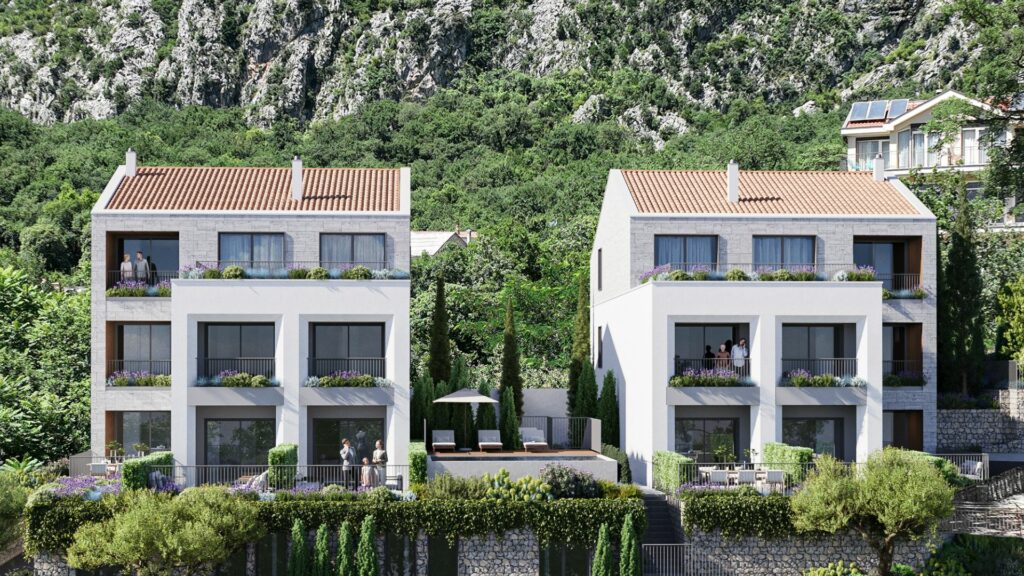
The Terracotta project in Tološi and Oravista in Orahovac are perfect examples of developments that stand out for their quality, attention to detail, and long-term value.
- Terracotta, located in one of Podgorica’s most developed areas, combines modern architecture with functionality and energy efficiency. It features top-quality materials, advanced insulation and joinery systems, and a strong focus on finishing and living comfort.
- Oravista, in the heart of the Bay of Kotor, in Orahovac, offers a different approach to luxury — blending natural surroundings with contemporary design. Each unit is designed to maximize views, light, and privacy, with a high construction standard suited to the coastal climate.
Both projects demonstrate how luxury in Montenegro can be built responsibly — respecting space, quality, and aesthetics, without relying on exaggerated marketing terms.
These examples show clearly that true luxury isn’t about appearance alone — it’s about thoughtful architecture, material quality, and meticulous attention to every detail.renaglašenim marketinškim pojmovima. Takvi primjeri jasno pokazuju da se pravi luksuz ne ogleda samo u izgledu, već u promišljenoj arhitekturi, kvalitetu materijala i pažnji prema svakom detalju.
Conclusion
Luxury new developments in Montenegro aren’t defined by labels but by quality — from structure and installations to layout, amenities, and finishing. Real luxury means comfort, durability, functionality, and aesthetics, while marketing “luxury” often stops at visual appeal.
Before making your purchase decision, ask for specifications, warranties, references, and real project examples. And if you want to ensure genuine quality and design a home that truly embodies luxury, the Gradient team can be your trusted partner on that journey.