


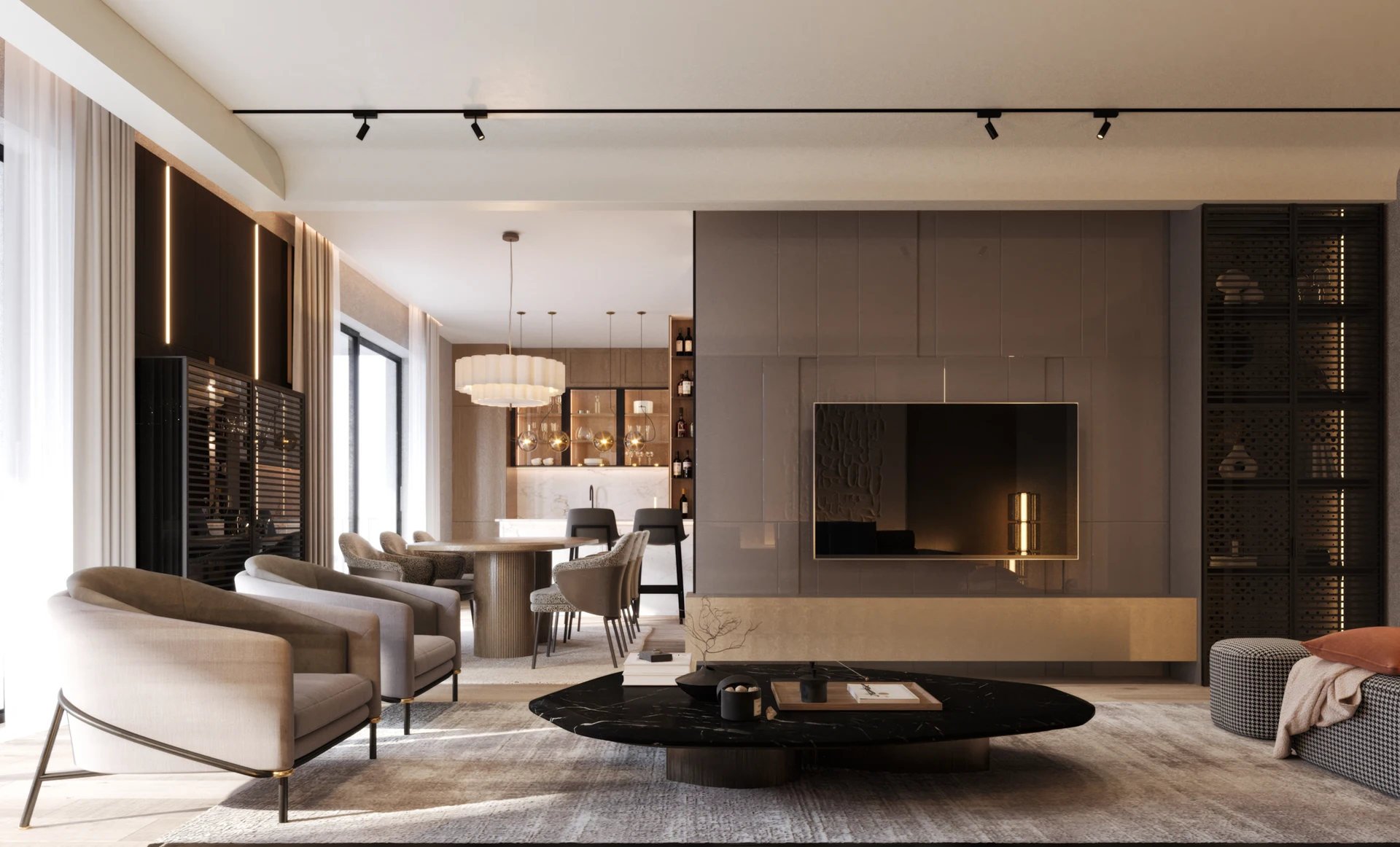
When people talk about interior design, they usually mention wall colors, furniture, textures, and materials. Lighting, however, is often treated as an afterthought — something to deal with only after everything else has been arranged. That’s exactly where the problem begins.
Lighting isn’t just a practical detail that lets you see the space. It directly affects how large a room feels, how warm the atmosphere is, the psychological comfort of the people living there, and the overall aesthetic impression a space leaves. Well-designed lighting can transform even the most modest apartment, while poor lighting can ruin even the most expensive interior.
At Gradient, we regularly encounter spaces with great potential that lose quality simply because the lighting was designed quickly or without enough expertise. In this article, we highlight the most common mistakes — and explain how to avoid them.
1. Relying solely on a single central light fixture
A single chandelier in the middle of the ceiling — that was the standard lighting formula in apartments for decades. Today we know this approach creates flat, uniform, and tiring spaces. A central fixture casts shadows toward the edges of the room and leaves corners dark, which visually shrinks the space and makes it feel less inviting.
Good lighting always works in layers: ambient (general) lighting, task lighting for specific zones, and accent lighting that highlights particular elements — a painting, a shelf, an architectural detail. Combining these three layers creates a space that can adapt to different situations and moods.
2. The wrong color temperature
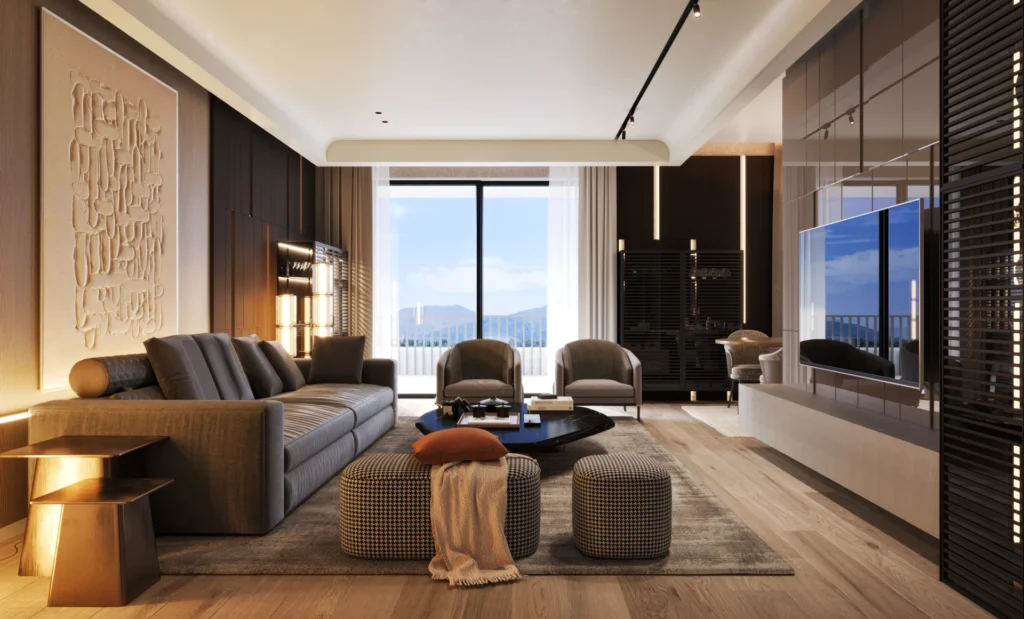
Light color temperature is measured in Kelvins (K) and has a huge impact on a space’s atmosphere. A common mistake is using cool white light (5000–6500K) in every room, simply because it’s the most widely available and cheapest option in stores.
Cool white lighting can be excellent in a workspace or bathroom, since it increases alertness and concentration. But that same lighting in a living room or bedroom creates a sterile, almost clinical feel that isn’t conducive to relaxation.
Warm white light (2700–3000K) is ideal for spaces meant for rest and socializing. Neutral white (3500–4000K) works well in kitchens and dining areas. Investing in the right color temperature is one of the cheapest yet most effective ways to improve how a space feels.
3. Overlooking dimmers
One of the most common oversights in lighting design is failing to consider dimmers at all. A dimmer lets you adjust light intensity, allowing the same space to function as a workspace during the day and a relaxing ambiance in the evening.
Dimmers are especially important in living rooms, dining rooms, and bedrooms. Installation isn’t complicated, but it needs to be planned in advance — adding dimmers later, after the electrical wiring is already in place, can be expensive and difficult. That’s why it’s smart to think about this during the design or renovation phase.
4. A poorly lit bathroom
The bathroom is a room where lighting plays an especially functional role, yet it’s one of the most neglected when it comes to interior design. A typical mistake is installing a single ceiling fixture, which casts shadows on the face and makes routines like applying makeup, shaving, or skincare more difficult.
A properly lit bathroom should have lighting on the sides of the mirror or around it — not just above it. Side lighting illuminates the face more evenly and eliminates unflattering shadows. Combining strong task lighting around the mirror with softer ambient lighting above the bathtub or shower makes the bathroom both more functional and more comfortable.
5. Ignoring natural light
Artificial lighting doesn’t exist in a vacuum — it works together with the natural light coming through the windows. One common mistake is not factoring in a room’s orientation when choosing lighting.
Rooms facing north or northwest get less direct sunlight and have a cooler tone — here it’s especially important to use warm artificial light tones to compensate. Rooms facing south or southwest, which are flooded with sunlight during the day, can be beautifully complemented in the evening with neutral or even slightly cooler light without losing their cozy feel.
Planning lighting without considering natural light results in a space that might look great at one point in the day but feel uncomfortable and mismatched at another.
6. Accent lighting as an afterthought
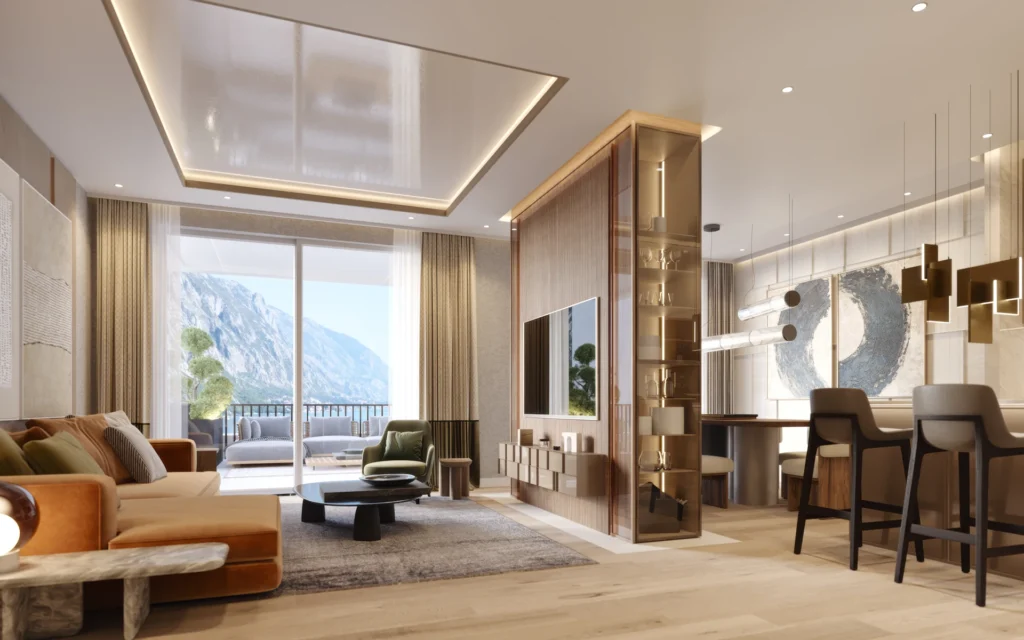
Accent lighting — directional light that highlights paintings, plants, bookshelves, architectural details, or wall textures — is often seen as a luxury or something that can wait. In practice, it’s the element that brings a space to life and makes it interesting.
Spotlights, LED strips behind furniture pieces or inside shelving, floor lighting along hallways — these are all solutions that fit easily into different budgets, but they require planning. When accent lighting is added later, without preparing the electrical wiring in advance, the end result is usually a compromise that doesn’t look the way it was intended.
Lighting should be planned, not picked at the last minute
All the mistakes listed above share a common root: lighting is treated as a detail that can wait, instead of being an integral part of designing a space. Any change to the lighting concept after the electrical work is finished means extra costs and compromises.
At Gradient, we treat lighting as an integral part of every interior design project — from the first sketch to the final installation. We work with architects and interior designers to create lighting concepts that are functional, aesthetically cohesive, and energy-efficient.
If you’re renovating or building and want to avoid these mistakes, get in touch with us and let’s talk about how to make your space truly shine.